By: Tovah Leah Nachmani
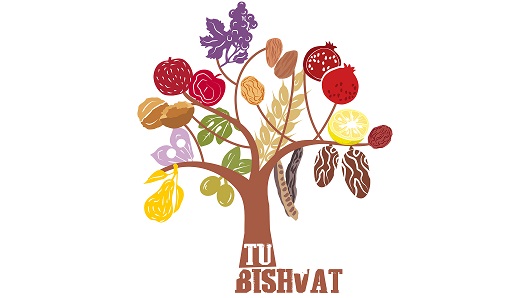
Among the mitzvot of warfare, the Torah warns and prohibits soldiers from uprooting fruit trees, stating: כִּי הָאָדָם עֵץ הַשָּׂדֶה – for the human being is a fruit tree (Deuteronomy 20:19).
You read correctly: the human being is not “like” a fruit tree, the human being “is” (equated to) a fruit tree. We must protect all fruit trees and not destroy or uproot them without reason, even in times of war, and even if they belong to our enemy, because they ultimately will sustain human life.
At our family Tu Bishvat celebrations over the years, I like to pair the guests of different ages and play a game. In five minutes, we compete to see which pair can come up with the most answers to the question: In what ways are human beings like fruit trees?
There are the obvious comparisons, and there are more nuanced ones. For me, a fruit tree that is lacking water is what many of us connected to Pardes feel like without Torah.
Trees do not care only about themselves. They live to nourish humans and other living beings. Likewise, we learn Torah not only as an intellectual pursuit. Our Torah inspires and emboldens us to develop the enormous potential within ourselves, in order to be able to give to others.
Tu Bishvat, the “New Year for the Trees,” is often associated with fruit, nature, and renewal, yet beneath its simple imagery lies a profound Jewish understanding of growth, responsibility, and relationship. From the Torah’s startling assertion that the human being is a fruit tree, through the agricultural laws that shaped sacred time, to the hidden biological rhythms of the Land of Israel and the spiritual teachings that emerged centuries later, Tu Bishvat weaves together law, land, and inner life. This day invites us to reflect on what it means to receive nourishment in order to give, to trust growth even when it is invisible, and to recognize every fruit — and every pleasure — as an expression of Divine love calling us into conscious relationship.
Profound Growth is Always Hidden
In every country in the world “tax season” is the cutoff date for reporting one’s income and taxes paid for the fiscal year that passed. When the Temple stood in Jerusalem, one tenth of the income of Israelite farmers and shepherds was tithed for the support of the Levites who served in the Temple and for supporting the poor. The tithing system included a one-tenth tax on fruit that had ripened in that year. In order to organize the tithe correctly, there had to be an agreed-upon date which would define the end of the fruit crop of the previous year and the beginning of the fruit crop of the next year.
In Israel, by the time the Mishnah was codified (2nd-century C.E.), Beit Hillel had determined that the 15th (ט”ו) of the month of Shevat would be the cutoff date. Why?
Summer tourists In Israel usually experience the landscape and terrain of Israel as brown and dry. In Israel, rain falls only during the six months of fall and winter, from the end of the Sukkot holiday (coinciding with October) to Passover (coinciding with April). By the halfway point, the 15th of Shevat, much of the rain has hopefully fallen, the trees have begun to absorb the water, and their sap begins to rise. The absolute nakedness of the fruit trees would produce a feeling of anxiety and panic if we did not trust the hidden cycles of life that are growing deep inside.
Since anxiety is a natural response to the unknown, God sends us a relief message with the earliest bloomer in Israel: the almond tree, gracing the hillsides in Israel, in bright arrays of pink and white. The almond tree reminds us to trust that, just like in nature, all profound growth and change may start with a bang but needs to evolve gradually.
From Taking to Thanking
Unlike Rosh Hashana, Sukkot, or Passover, Tu Bishvat was a minor festival that held little practical relevance once the Temple was destroyed. So when tens of thousands of Jews flocked back to Israel and particularly to Tzfat in the 16th century after the Spanish Inquisition, the Kabbalists of Tzfat created customs that enlivened and spiritualized the “New Year for the Trees,” investing it with spiritual significance. Tu Bishvat celebrations with wine and fruits were woven with prayers and kabbalistic readings, as well as verses from the sacred texts of the Torah, Mishnah, and Talmud.
The Kabbalists of Tzfat in the 16th century taught that just as we need God’s presence in our lives, God needs our presence as well. If we eat our fruit in a conscious and mindful way, we are actually fulfilling the purpose for which God created the fruit – as an invitation to be in relationship.
When children receive a gift, they may say a dutiful and token thank you to the giver and run off to play with their new source of enjoyment. When we serve children a meal, they may gobble it down, or make a rejecting face or pick through only what appeals to them and quickly leave the table.
Are we any different? Have you ever been dismayed after planning, choosing and giving a gift, or planning, cooking, and providing a meal where a guest eats and drinks to their heart’s delight but doesn’t express genuine heartfelt appreciation to you for all your care and time and effort as the provider? The healthy and aesthetically served meals in my dear mother’s home were definitely an expression of love. As I child, or even a teenager, I am certain that while I would thank my parents before leaving the dinner table, as I was taught, I never considered my mother’s genuine desire and even need for me to acknowledge and appreciate her endless loving investments in our relationship. My mother cared about me, and I cared primarily about myself. The same scenario happens with my own children and now grandchildren, whom I love and therefore occasionally remind of the following:
Rav Kook in his profound writing on the deeper lessons in the Talmudic tractate Berachot asks: What is the purpose of saying a blessing before we eat? He writes that the prohibition against enjoying anything without a blessing is because that behavior points to an absence of recognizing the Divine good. Recognition is the foundation of all Divine service. Therefore it is forbidden to enjoy anything without a blessing. This can be understood on a deeper level as well: that all the pleasures of this world can only fulfill their destined roles when they are directed at their ultimate purpose, which is recognizing God’s love for us in this world.
If the human being is a fruit tree, then our purpose is not fulfilled by what we consume, but by what we acknowledge and pass on. Just as a tree draws sustenance from hidden sources in order to bear fruit for others, so too our eating can become an act of service — a moment of awareness that transforms nourishment into connection.
From Consumption to Connection
Some communities developed Tu Bishvat “seders” akin to the lengthy Passover Seder, combining story, song, and prayer.
Some ate 15 kinds of fruits, and recited the 15 Psalms of Ascent which were sung by the Levites as they ascended the 15 steps into the inner courtyard of the Temple, thereby reconnecting us to the original aim of the tithing – the support of the Levites whose ultimate purpose was facilitating human connections with God.
Some still celebrate by seeking out and eating fruits that were grown only in the Land of Israel.
Others enjoy a meal made from the seven species that the Land of Israel was blessed with from ancient times: wheat, barley, grapes (raisins, wine), figs, pomegranates, olives (olive oil), and dates (date honey).
Does it matter which foods one chooses to eat on Tu Bishvat? Or which sources are studied?
To me it matters less what we eat and more the extent to which we remember Rav Kook’s teaching that every fruit is a gift from God, created not only for the purpose of nourishing us, but as an expression of God’s love and yearning for our connection. Every time I eat, I aim to invest that intention into the blessings I make before eating. And I’m human. So when I fail, and feel dismay at myself, I take it as a sign and a reminder to aspire and to try again next time.